

Art
Metamorphoses
At Rivau
2026 ART EXHIBITION AT THE CHÂTEAU DU RIVAU
Metamorphoses at Rivau
The new Modern Art exhibition in the Loire Valley
To discover from April 1st to November 1st, 2026
Bringing art history into the present day is the credo of Patricia Laigneau, curator of the exhibition. The exhibition invites visitors on a journey through the art history of the past, thanks to the creative and playful vision of contemporary artists ! Through the reinterpretation and recycling of key works from Renaissance art history, the secrets of the great 16th-century painters and the cabinets of curiosities are revealed from a new angle, combining humour and wonder.
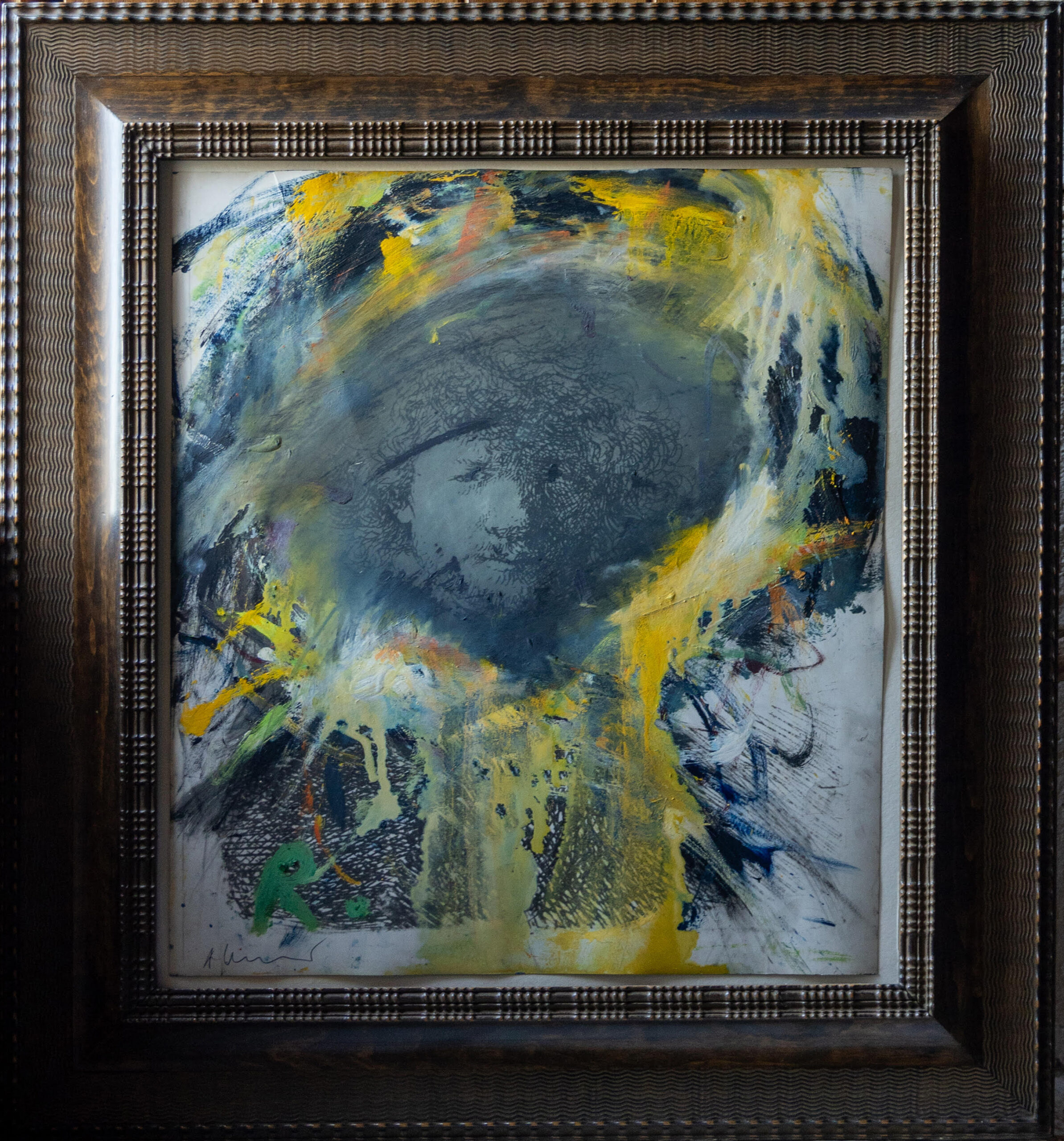
Arnulf Rainer, Rembrandt, 1980-81
Collection Château du Rivau
The different themes of the exhibition
The Portrait room
In the Portrait Room, depictions of the former lords of Le Rivau from the 15th century, painted by Hyacinthe Rigaud (the King’s portrait painter), interact with portraits from our own era through various media:
– Photography, by Valérie Belin, who photographs the current family.
– Tapestry, with German artist Volker Hermes, who reinterprets the iconic portrait of King François I by François Clouet (the lord of Rivau was his Grand Equerry during the Renaissance) to infuse it with an iconoclastic spirit through a textile work.
– Austrian artist Arnulf Rainer, meanwhile, has confronted his flashes of brilliance with his personal icons by covering Rembrandt’s portrait with paint.
– The mirror, with the work of Jean-Baptiste Caron : visitors, by breathing on a mirror, will see a dream phrase appear before it disappears immediately.
– Sculpture with Didier Trénet‘s faceless concrete mask.
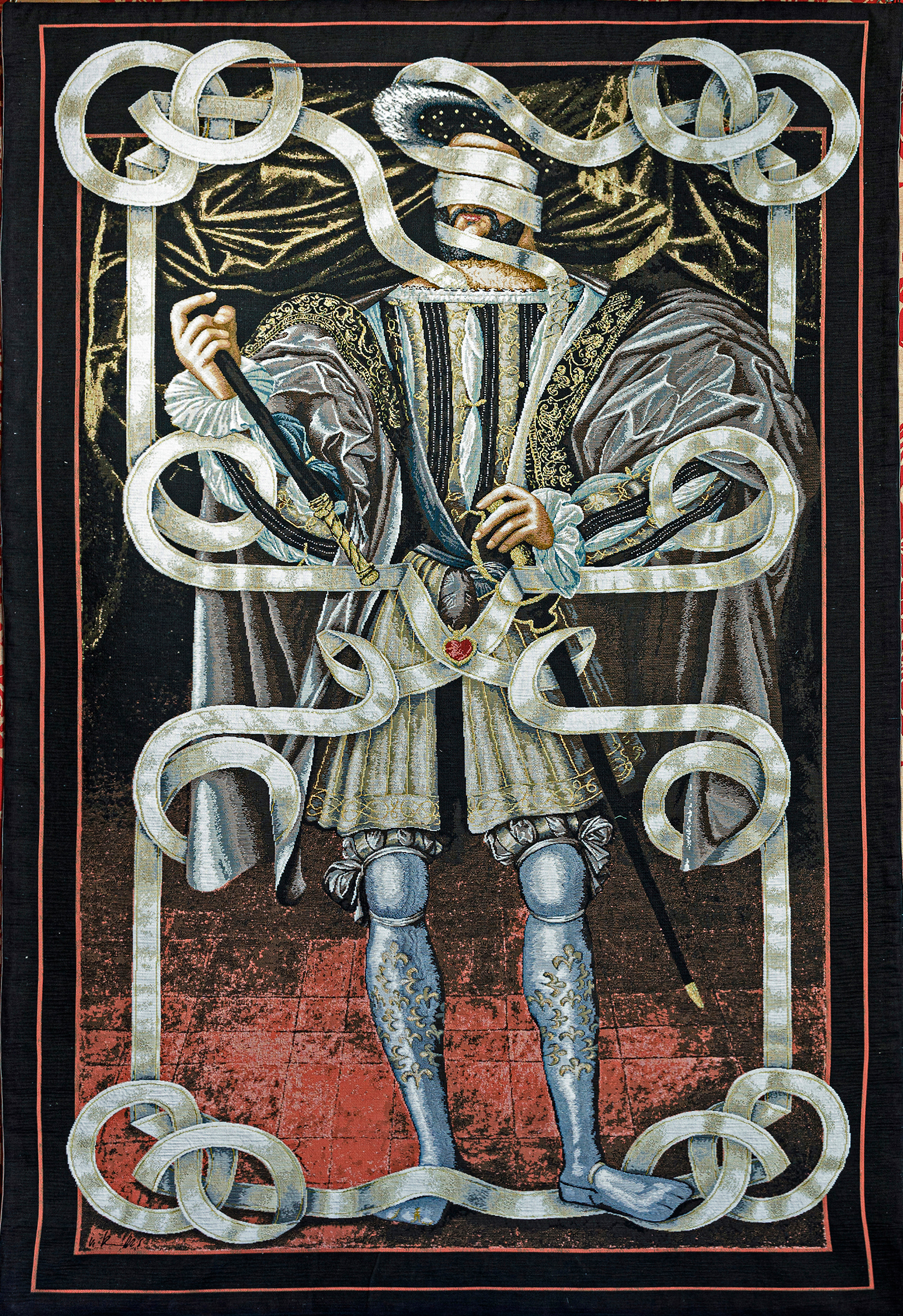
Volker Hermes, François, série Hidden Portraits/Portraits Cachés, 2025 ©Léonard de Serres/CMN
The Grand Logis room
This room is dedicated to animals and reflects the passion for the animal world of princes of yesteryear in the spirit of Renaissance cabinets of curiosities. In a manner reminiscent of the hunting art collections of the parents of the current owners, numerous pieces from the Rivau collection, Armelle Blary, Sara Battaglia, Nicolas Darrot, Alexis & John Gailla, Jeff Koons, Theo Mercier, Art Orienté objet, Julien Salaud, Marnie Weber, and SUN Xue question the art of the trophy.
The wall works by Karen Knorr and Marie Cécile Thijs reference medieval bestiaries. François Chaillou addresses the disappearance of species. Julien Salaud has installed a dragon, star of the medieval bestiary, alongside Margaux Laurens Neel‘s unicorn. Magali Lambert challenges the hierarchy between prey and predators, while Zoe La Douce sends messages.
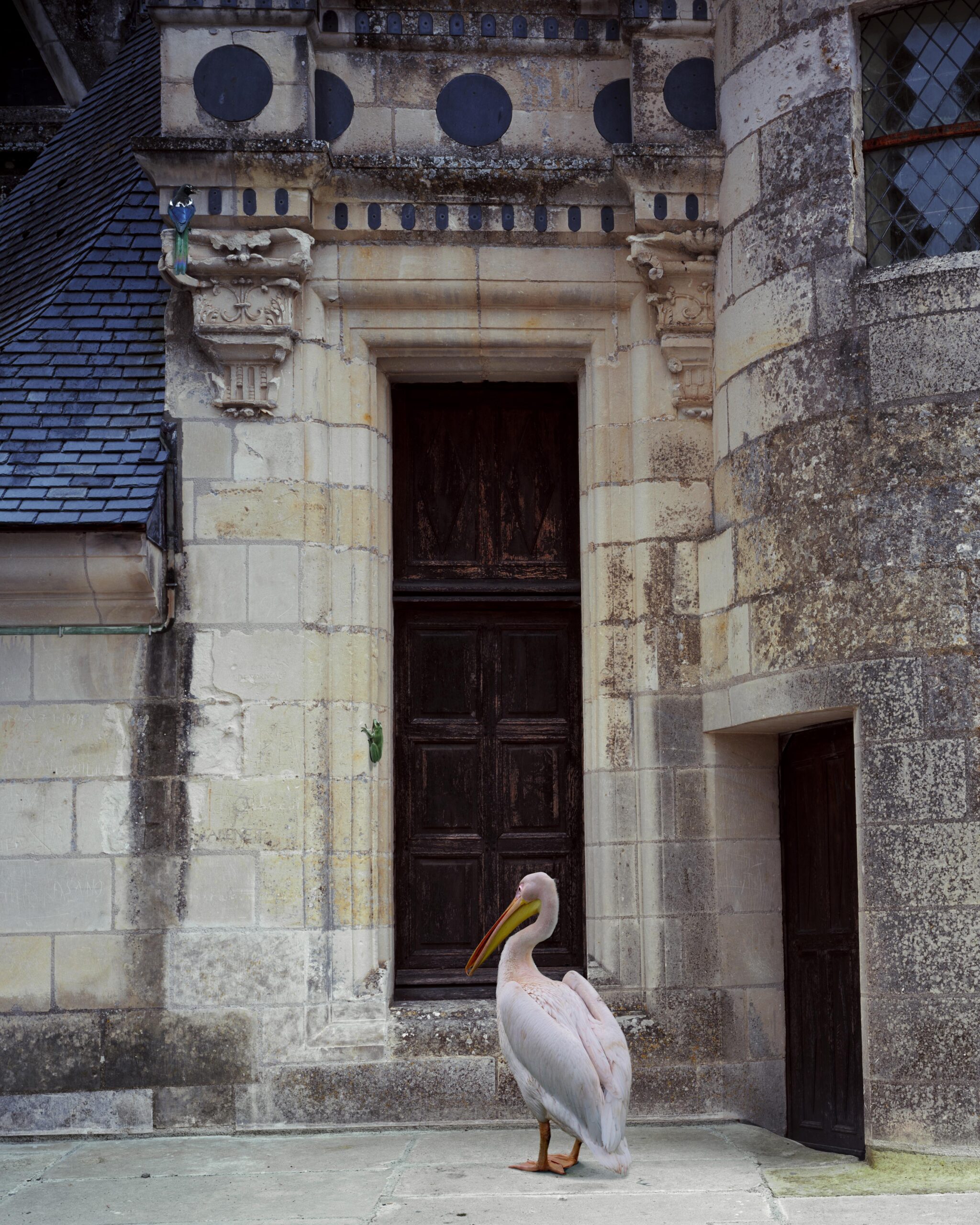
Karen Knorr, King’s Audience, série Fables 2004/2007
Collection Château du Rivau
The Banquet Hall
In the Banquet Hall, large ceramics by the Lamarche-Ovize duo, inspired by their medieval imagination, converse with 19th-century pieces by Jean-Charles Avisseau. On the walls, works by Gilles Barbier and Fabien Verschaere on the theme of still life converse with Sabine Pigalle‘s Last Supper, while Laurent Grasso‘s piece measures itself against a 16th-century Saint Martin by a Flemish artist (Saint Martin had his Christian revelation not far from Le Rivau) and Corine Borgnet‘s portrait confronts a famous 16th-century caricature painting of Still Life.
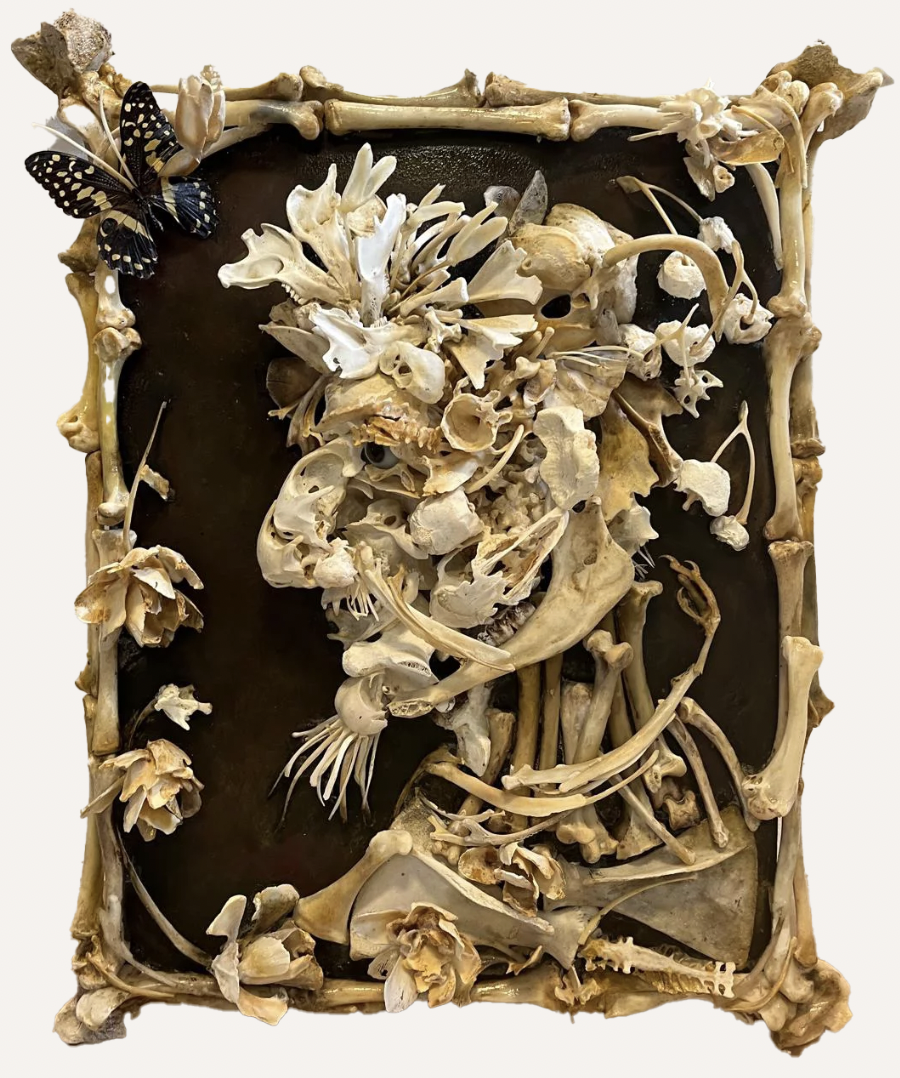
Corine Borgnet, Le dernier souper d’Arcimboldo, 2026
©Corine Borgnet
The Ladies Room
This room is dedicated to the ladies, the heroines of the castle, past and present, from Rivau and elsewhere. To those who came in winter to sit on the cushioned seats, not far from the majestic Gothic fireplace, to embroider, weave and chat. Here, history painting is revisited through the female figure in art history.
At the entrance, a Virgin and Child in a large ceramic medallion by Giovanni Della Robbia, a major artist of the Florentine Renaissance, dialogues with Sheila Hicks‘ Tondo on the mantelpiece. Portraits of great ladies, archetypes of Italian Renaissance art history, are evoked by Pierre Ardouvin, Gilles Barbier, Julien des Monstiers, ORLAN, and Sabine Pigalle, illustrating an ideal museum dedicated to the great female figures of art history.
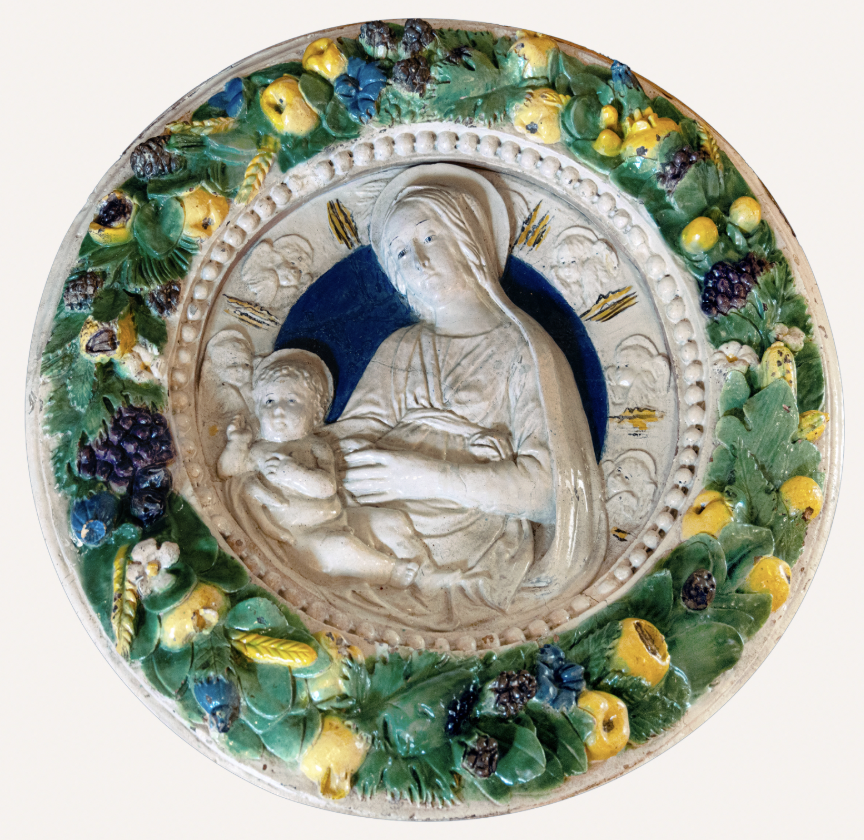
Giovanni Della Robbia, Vierge à l’Enfant, 1534
Collection Château du Rivau
For their part, Agnès Thurnauer and Ashley Zelenskie question the Dutch Golden Age. Céline Cléron‘s Lady with Handkerchiefs revisits the iconic Della Robbia, adding a touch of humour, dear to the artist, with her disposable tissue-shaped handkerchiefs. Ghosts are also part of history painting, Gilles Barbier tells us with Hawaian Ghost, because painting can be a fantasy. Despite its announced deaths, physical or cerebral, it always ends up coming back, like a ghost.
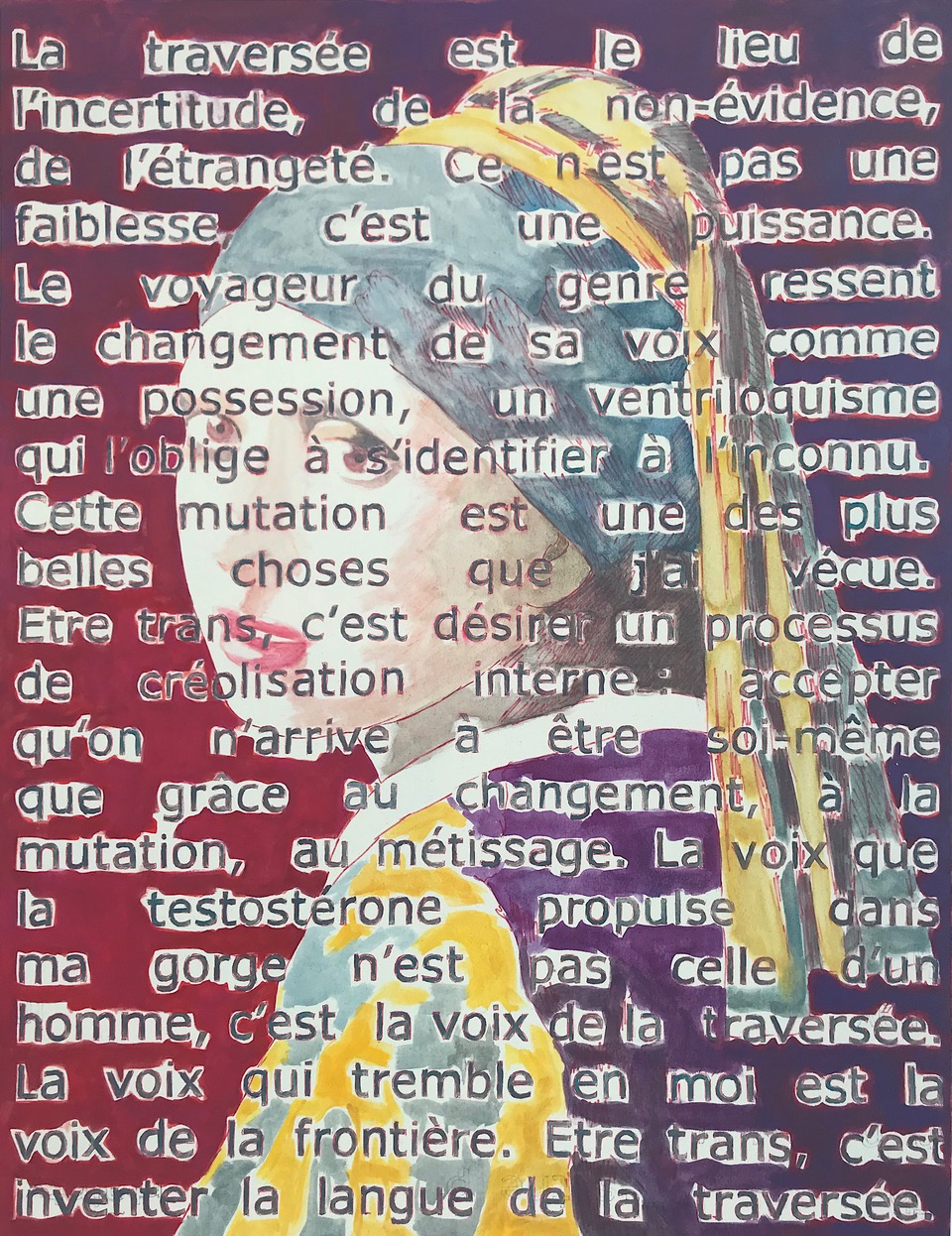
Agnès Thurnauer, Créolisation interne, 2021
Courtesy de l’artiste et Michel Rein Paris/Bruxelles
The Joan of Arc Tribute Rooms
In the rooms dedicated to Joan of Arc (who came to Le Rivau in 1429 to collect horses), the works dedicated to the saint explore different facets of the heroine’s representation. The 19th-century images and sculptures on display in the three rooms embody the saviour of France.
Le Rivau aims to show how perspectives and attitudes have changed over time through its exhibitions devoted to history reinterpreted through the lens of our era. Pierre and Gilles highlight Joan’s iconic status, while Mathieu Duffois explores her darker side using his favourite material, black stone. Léo Dorfner tells a different story using the marks he has tattooed on the image of the maiden. Charles Freger highlights her legacy in popular culture, while Spanish artist Eugenio Merino gives her an explosive temperament.
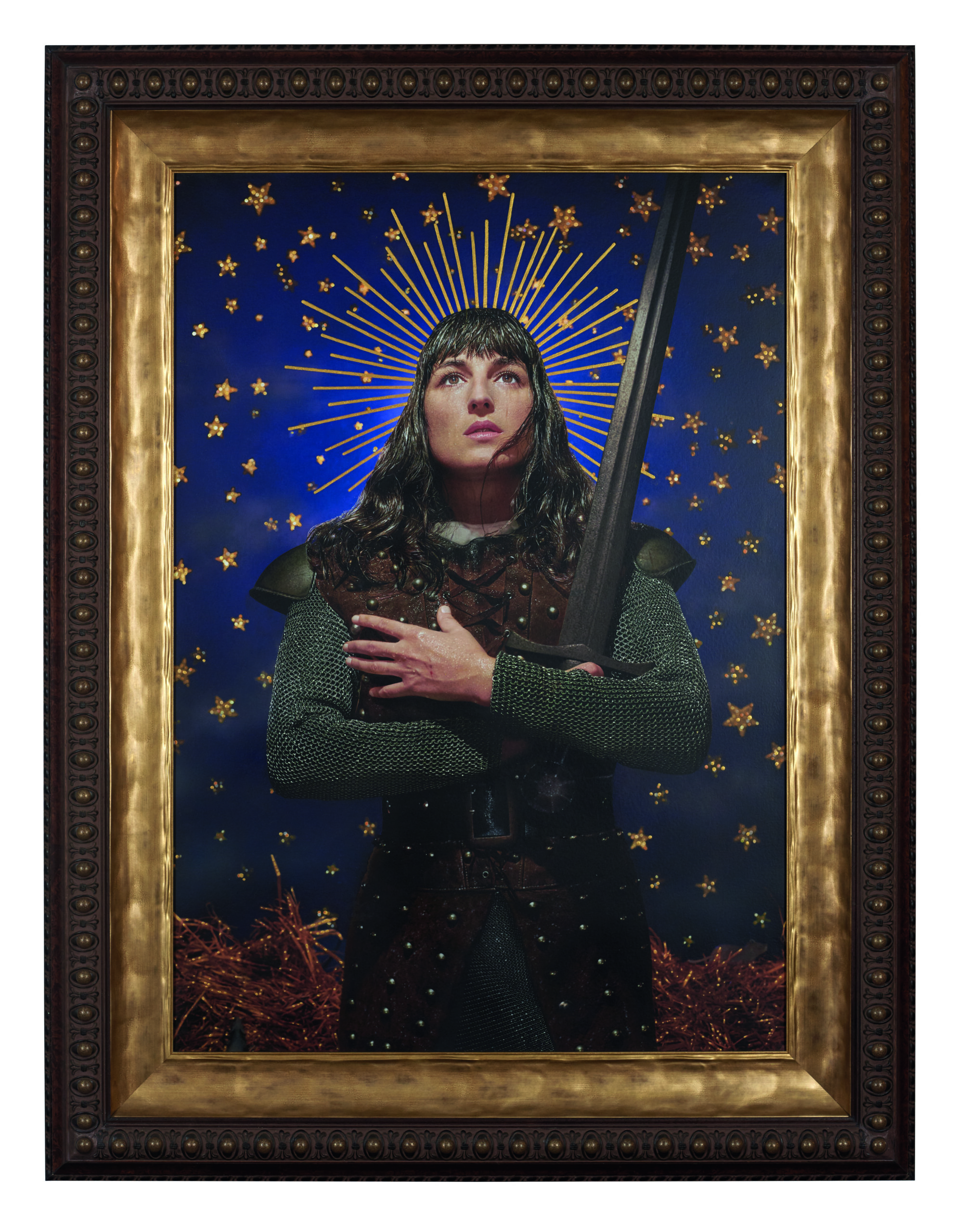
Collection Château du Rivau
The cabinet of curiosities
The cabinet of curiosities or studiolo was the place where the lord of the manor kept precious objects brought back from distant travels and curiosities intended to stimulate the imagination. Nowadays, one of the pleasures of contemporary art is to decipher the meaning of the work and thus prolong the spirit of curiosity. At Le Rivau, we perpetuate this attitude by incorporating works of art from our own era, in the spirit of curiosity and sometimes the unexpected.
Audrey Pruvot‘s feathered deer recalls the place of chimeras in the Renaissance, as do Angélique de Chabot’s Black Bear and Luke James‘ Guardian. They converse with Bertrand Gadenne‘s video Le Hibou (The Owl). Meanwhile, Céline Cléron‘s Masque singulier (Singular Mask) reminds us of the vanity of earthly possessions. The Salvator Mundi (Saviour of the World) created by Belgian artist Jan Fabre, a sphere topped with a spine similar to the globus cruciger of Christian tradition, is also in this vein.
Conversing with Pauline Bazignan‘s Tempête, inspired by Giorgione‘s masterpiece, one of the most enigmatic paintings in art history, Gisèle Garric‘s large bust brings to life the memory of Bernard Palissy, who incorporated the Italian cave style into his ceramics.
Art objects have also been given a contemporary twist, as has the art of glassmaking. The large central table is set with glassware by Richard Fauguet, echoing Kim Kotatamalune‘s La promesse, a subtle, airy opaline sculpture that overlooks it. Gold features in Vincent Olinet‘s oversized crown, while Jeanne Susplugas‘ Medicine Jar reinterprets the pharmacy jars found in grand Renaissance residences.
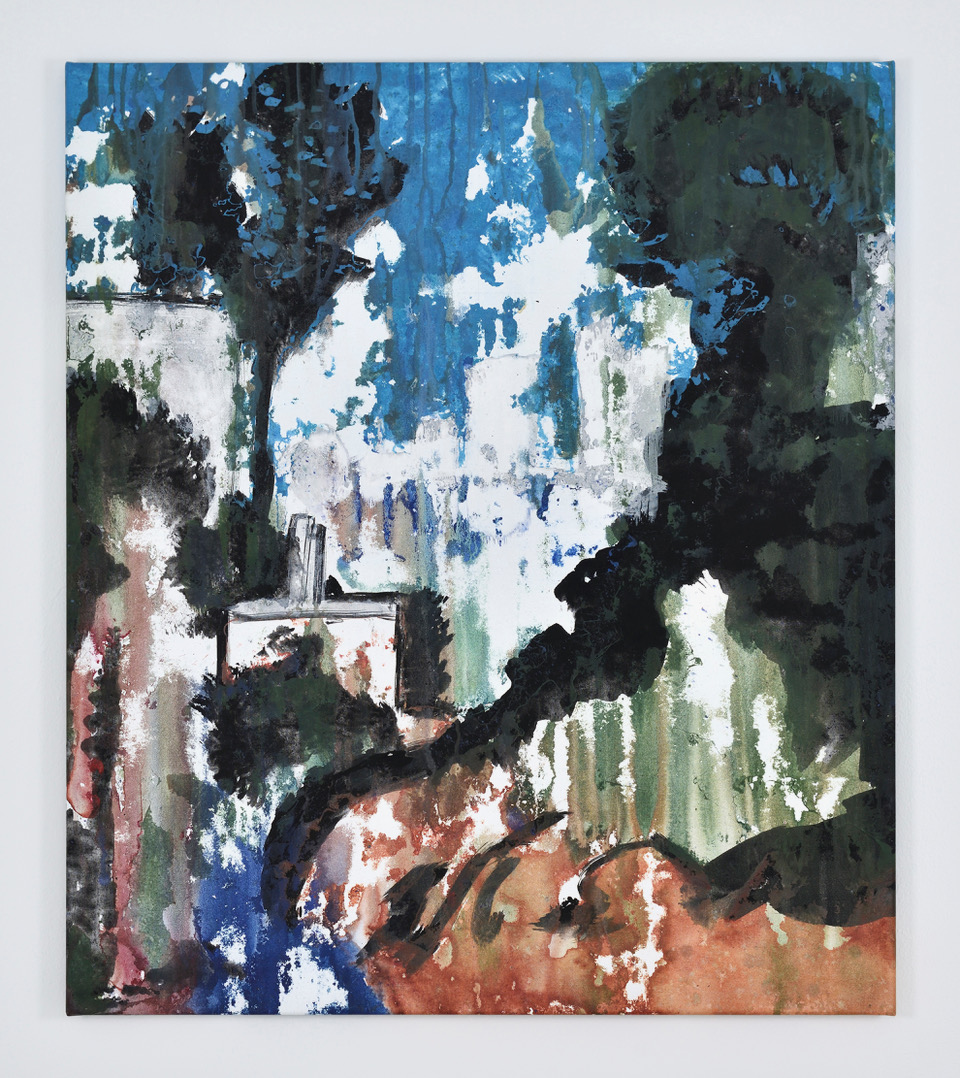
©Rebecca Fanuele, avec le soutien de l’ADAGP
Courtesy Pauline Bazignan et galerie Backlash
In the Renaissance Stables, the immersive installation : Art in Space
New this year : The video shows dancer Jeanne Morel performing in extreme locations, such as in zero gravity. Her emotions are captured in real time using sensors placed on her body. Artist Paul Marlier then transforms this data into moving digital paintings, making her sensations visible on screen.
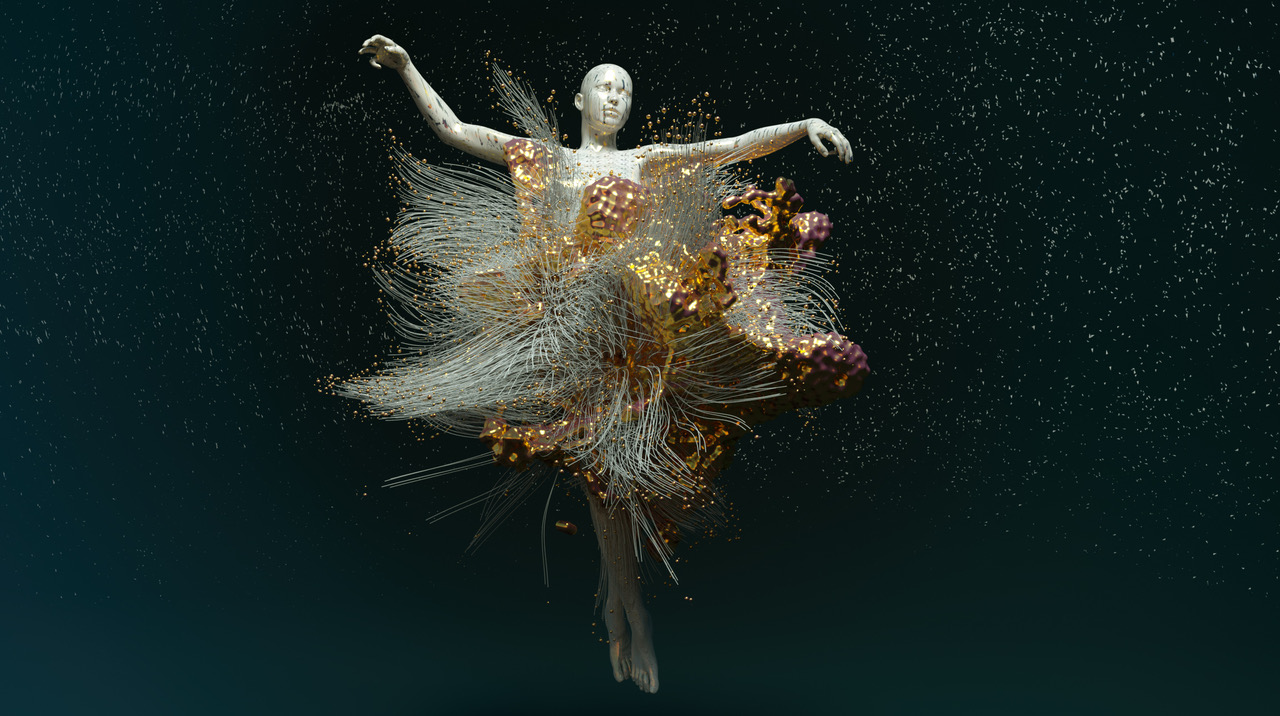
©Jeanne Morel & Paul Marlier
Practical informations
Exhibition Métamorphoses au Rivau
Everyday from April 1st to Novembre 1st, 2026
From 10 a.m. to 6 p.m. in april and october, and from 10 a.m. to 7 p.m. from may to september
Exhibition included in the ticket entrance for castle and gardens